
Scratch vs. Pre-prepared Cooking: What’s Right for Today’s School Kitchens?
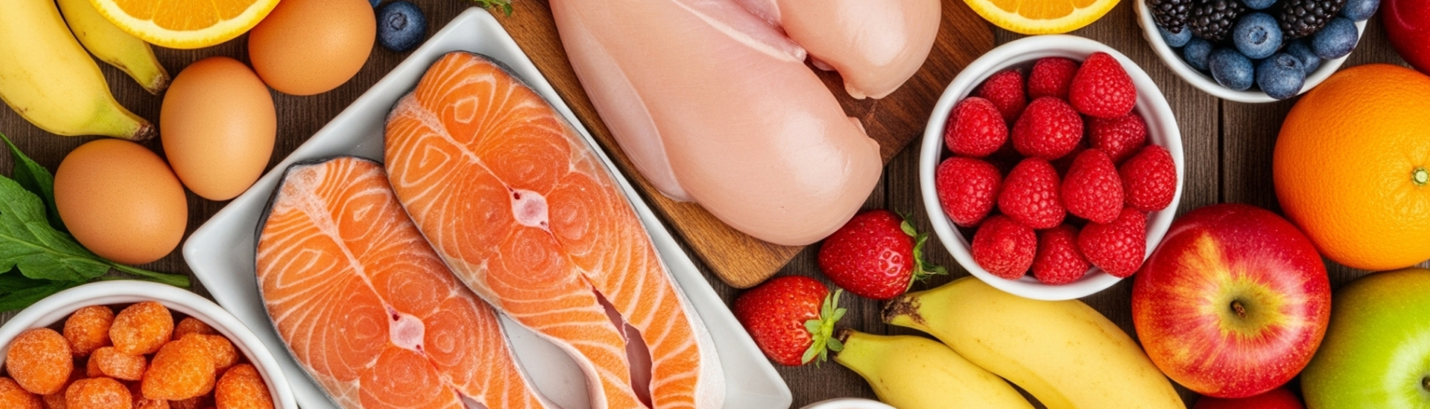
Scratch or pre-prepared cooking? It’s a big question among K-12 foodservice directors, school nutritionists, and facility planners.
With conflicting factors such as rising food costs, staff shortages, and growing student expectations for better quality food, deciding how often to cook meals from scratch or use pre-packaged foods isn’t easy. Many schools incorporate both methods into their foodservice program, but each has its own pros and cons.
Here is a breakdown of key benefits and challenges to both methods, along with recommendations to help your team deliver high-quality meals.
What are the benefits of scratch cooking in K-12 schools?
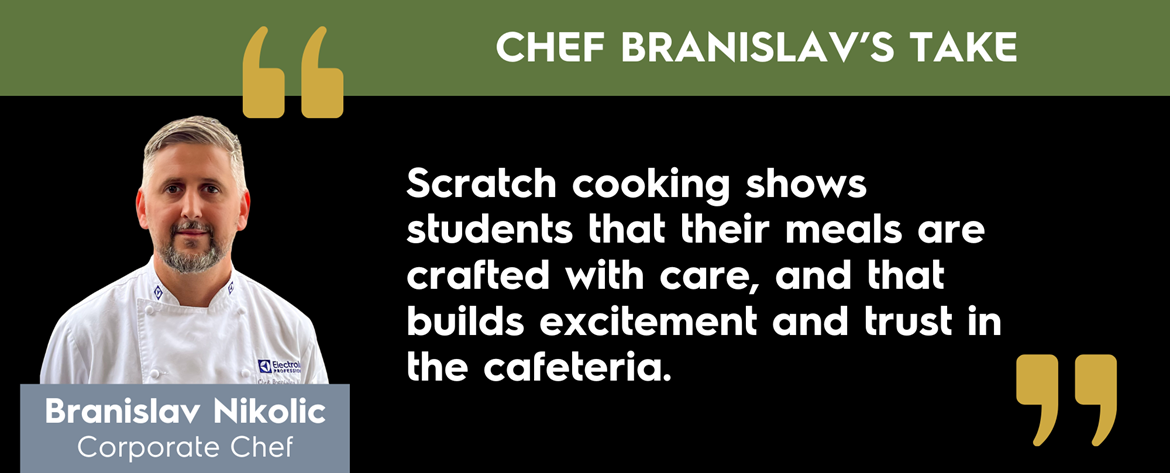
According to the School Nutrition Association, nearly 77% of schools offer some scratch-prepared meals. Why? Scratch cooking can transform the cafeteria experience for students, staff, and the broader school community.
Top advantages of scratch cooking:
- Better Student Engagement: Fresh, appealing meals boost participation rates for students, which reduces food waste and lowers the average cost per meal.
- Educational Opportunities: It gives programs the chance to include school gardens, nutrition education, and culinary electives in the lunch experience.
- Employee Empowerment: Cooking from scratch offers staff greater job satisfaction and builds a sense of pride in their work
What are the challenges of scratch cooking?
Scratch cooking isn’t without its hurdles, especially for schools and districts with limited resources. Decisions are often heavily influenced by federal reimbursement rates, which may not always cover the higher labor and ingredient costs of scratch cooking.
Key drawbacks of scratch cooking:
- Higher Ingredient & Labor Costs: Fresh foods spoil faster and require more skilled labor.
- Training & Food Safety Risks: Handling raw meat, produce, and allergens requires investing in professional development for your staff.
What are the benefits of pre-prepared cooking in schools?
While scratch meals are gaining popularity, according to SNA, around 90% of schools still use one pre-prepared methods. For good reason.
Top advantages of pre-prepared cooking:
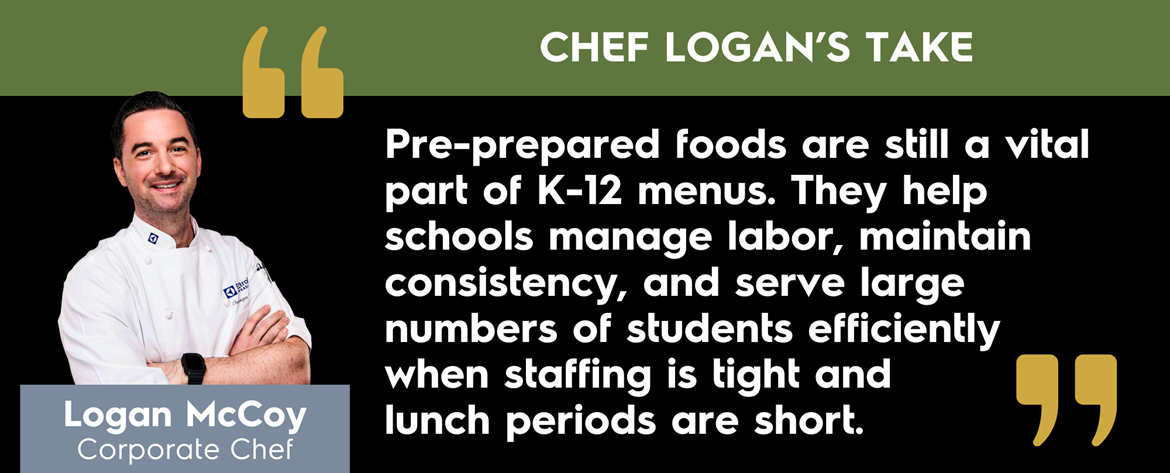
- Speed & Consistency: Easily serve large student populations during short lunch breaks.
- Lower Costs: Pre-prepared ingredients reduce labor needs and simplify training.
- Food Safety & Shelf Life: Frozen and packaged foods reduce contamination risks and waste.
What are the challenges of pre-prepared cooking?
Nearly 75% of schools reported that pre-prepared models can present operational and engagement challenges, according to SNA.
Common issues with pre-prepared cooking:
- Student Disinterest: Pre-prepared meals may lack visual appeal and variety, causing students to skip lunch or throw food away.
- Sustainability Concerns: Excess packaging and processed ingredients may conflict with your district’s environmental goals.
Schools will need to weigh the pros and cons of each cooking style and build a foodservice program that best fits their situation. Oftentimes, you can get creative and build a hybrid strategy of the two, such as using vibrant scratch vegetables paired with a pre-prepared protein. Or using a pre-prepared sauce base but adding fresh, scratch-prepared vegetables and herbs.
What equipment supports scratch cooking in K-12 kitchens?
If your school is embracing or expanding scratch cooking, the right equipment makes a major difference.
Recommended equipment for scratch cooking:
- Randell Precise Temp FX Series: Consistently keep your fresh ingredients at precise temperatures, even in demanding kitchen environments.
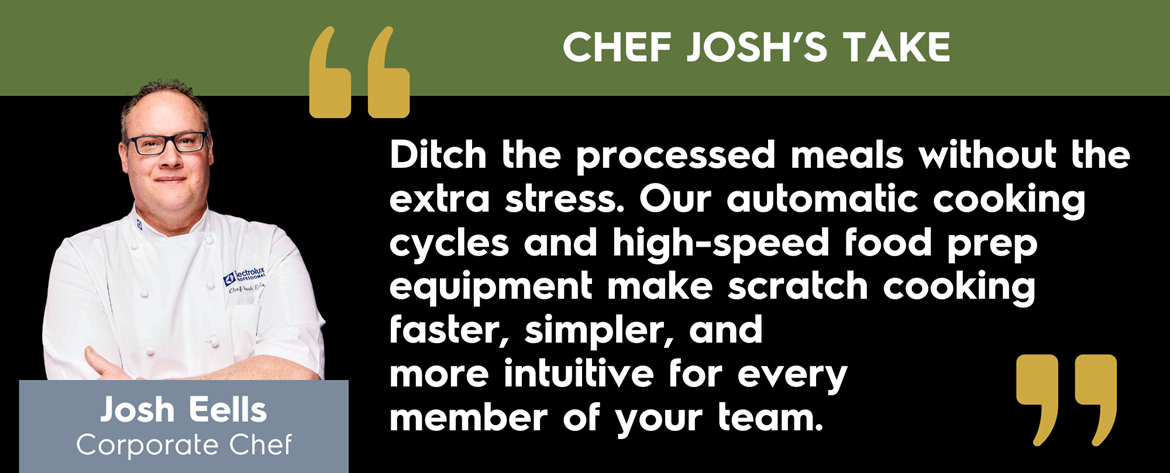
- Electrolux Professional TrinityPro: For fresh produce, the TrinityPro speeds up your prep by quickly and safely chopping and combining ingredients. This is a huge timesaver for K-12 staff.
Success Stories from Real Kitchens: El Sushi Loco
It used to take California restaurant chain El Sushi Loco’s staff 30 minutes to manually slice 55 pounds of tomatoes. With the TrinityPro, it only takes 5 minutes. For schools looking to cook from scratch on a large scale, having these pieces of equipment in your lineup can help your staff do much more in less time.
- Electrolux Professional Spin Dryer VP4 “Greens Machine”: Dry up to 20 gallons of fresh leafy greens in just 80 seconds.
- Electrolux Professional SkyLine Combi Oven: With an intuitive interface and an ergonomic design, this combi oven makes it much easier for kitchen staff to prepare scratch meals quickly.
- Groen Braising Pan: Braise, roast, boil, simmer, poach, bain-marie, pan-fry, grill, sauté, and steam your fresh ingredients all from one versatile, precise piece of equipment for consistent scratch cooking.
Success Stories of Large Volume Cooking
“There’s no way for Mercy Chefs to serve more than 26,000 people a day without the right equipment. Groen (Braising Pans) have been part of that since the very beginning.”
— Chef Gary LeBlanc
What equipment supports pre-prepared cooking in K-12 kitchens?
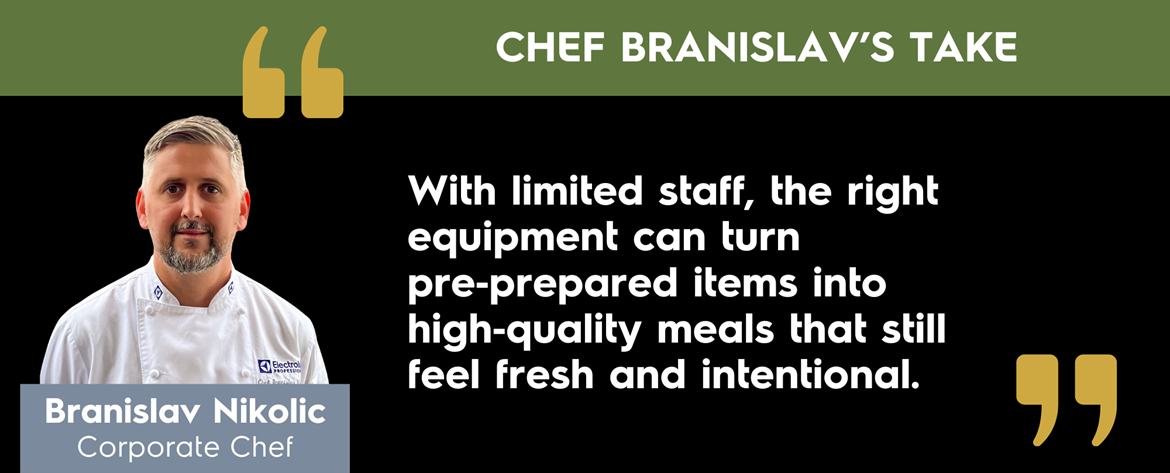
Even with limited staff or centralized production, efficient pre-prepared cooking is possible with these types of kitchen equipment.
Recommended equipment for pre-prepared cooking:
- Electrolux Professional SkyLine Combi Oven & SkyLine Blast Chiller: If your district uses a centralized kitchen, save time by quickly lowering the temperature of hot food, such as stocks, noodles, and desserts. This makes it easier for school-site kitchen staff to thaw and serve.
- Groen SmartSteam® Pro Steamer: Available in both boilerless and connectionless models, it has an easy-to-use touchscreen with programmable pan timers, making it easy to steam pre-prepared dishes to perfection.
- Groen Steam Jacketed Kettle: Consistent and repeatable results are possible with an advanced cooking probe and up to 9 programmable recipes.
- Electrolux Professional Thawing Cabinet: Safely thaw pre-cooked proteins in less time, allowing schools to serve faster.
FAQ: Scratch vs. pre-prepared cooking in schools
- Q: What’s better for K-12 foodservice: scratch or pre-prepared?
- A: It depends. Scratch cooking offers fresher, more customizable meals, but requires more staff and training. Pre-prepared methods offer speed, safety, and consistency, which makes it ideal for tight budgets or small teams.
- Q: Can you combine both scratch and pre-prepared cooking methods in school cafeterias?
- A: Yes. Many schools are adopting a hybrid model, blending scratch cooking for key meals with pre-prepared techniques to save time and money. It’s common for a central kitchen model to produce large batches of meals from scratch and then blast chill and distribute them to other schools.
- Q: How can kitchen equipment support both methods?
- A: Versatile, programmable equipment from Electrolux Professional Group can adapt to either model. This makes it easier to pivot between prep styles based on your district’s staffing, budget, and goals.
Click here to view the Electrolux Professional Group K-12 Educational Guide.